Electric vs Gas Dryer: Which Is Cheaper to Run?
Electric vs gas dryer: cost per load and per year at 2026 energy prices from ENERGY STAR data, plus heat pump dryers, outlets, hookups and venting.
By the GableMath team · Published · 4 min read
If your laundry room already has a gas line, a gas dryer is the cheapest to run — about 12¢ a load versus about 39¢ for a standard electric dryer at 2026 average prices, roughly $75 a year less. If you only have a 240-volt outlet, don't run a gas line just for the dryer: a heat pump dryer cuts the electric cost in half and needs no vent.
- Gas line already in the laundry room
- Gas dryer
- 240 V outlet, no gas
- Electric — or heat pump if you can
- No vent possible (condo, closet)
- Heat pump dryer (ventless)
- Lowest purchase price
- Standard electric dryer
Short answer: a gas dryer costs about a third as much to run as a standard electric dryer, but it only makes sense if the gas line is already there. ENERGY STAR's test data put an average certified vented electric dryer at about 600 kWh a year and an average gas dryer at the equivalent of 686 kWh — similar amounts of heat — but a unit of heat from gas costs far less than the same heat from electricity. A heat pump dryer, which recycles its own heat, sits in between and needs no vent at all.
Electric vs gas dryer cost per load
| Dryer (ENERGY STAR certified average) | Energy per year | Per load | Cost per load | Cost per year |
|---|---|---|---|---|
| Electric, vented | 600 kWh | 2.12 kWh | ~39¢ | ~$109 |
| Heat pump, ventless | 301 kWh | 1.06 kWh | ~19¢ | ~$55 |
| Gas, vented | 686 kWh-equivalent (≈23.4 therms) | ≈0.083 therm | ~12¢ | ~$35 |
At 18.19¢ per kWh (EIA, Jan–Aug 2026) and $1.48 per therm (EIA 2025 average), over the 283 loads a year the federal test procedure assumes. We count all of a gas dryer's rated energy as gas; its drum motor and controls also use a little electricity, so its true cost is slightly higher than shown.
The gap per load looks small — about 27¢ — but at 283 loads it's roughly $75 a year, and families who run a load a day or more save proportionally more.
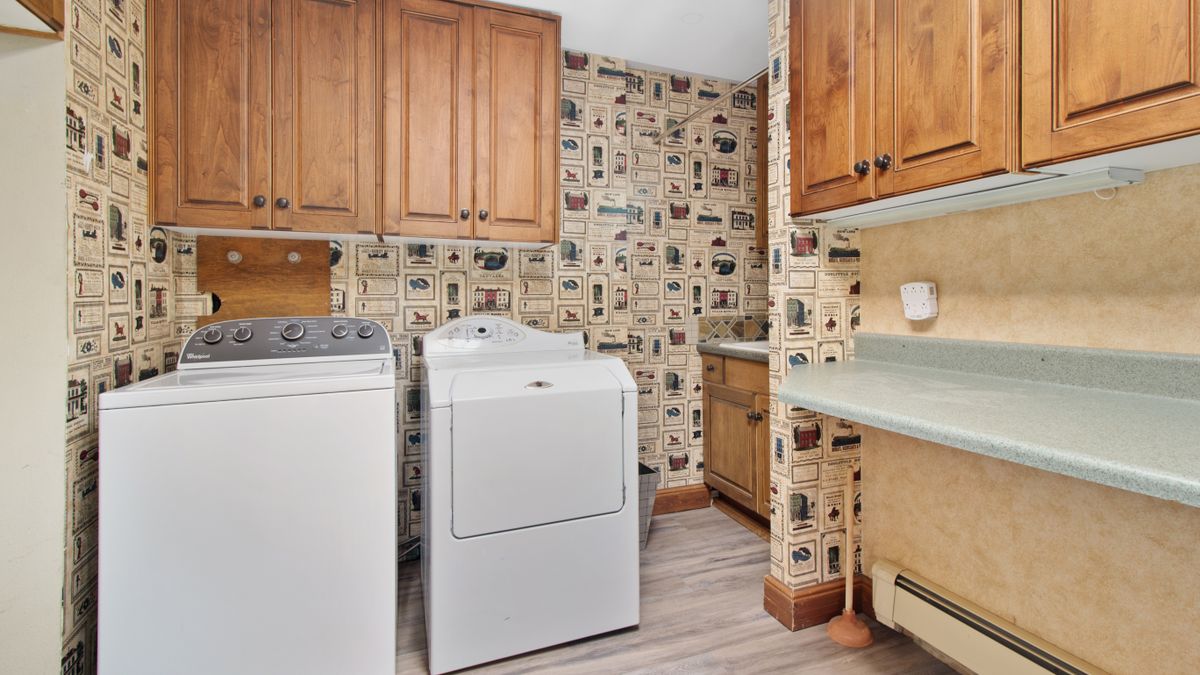
Gas vs electric dryer cost by where you live
The comparison swings with local prices. Where electricity is expensive — California and New England run around 30¢ per kWh or more — an electric dryer costs closer to 65¢ a load and gas wins by a wider margin. Where gas is expensive and power is cheap, the gap narrows. Plug your own rates into the clothes dryer cost calculator, or look up your state's average in electricity rates by state.
Installation: what each dryer needs
The running-cost difference is often smaller than the cost of changing hookups, so start with what your laundry room has:
- Electric dryer: a dedicated 240-volt, 30-amp circuit. Newer homes have a four-prong NEMA 14-30 outlet; the electrical code has required the four-wire hookup for new dryer circuits since the 1990s, and older homes may have a three-prong 10-30. Dryers are often sold without a cord so you can match your outlet.
- Gas dryer: a gas supply line with a shutoff valve within reach and a standard 120-volt outlet for the motor and controls. Converting between natural gas and propane needs the maker's conversion kit.
- Both vented types: a rigid or semi-rigid metal duct to the outside, as short and straight as possible. Long, crushed foil ducts waste energy and are a fire risk.
- Heat pump dryer: no vent; most need only a standard outlet or a 240-volt circuit depending on size, plus a drain or a water tank to empty.
If you have an electric hookup and no gas, running a new gas line to save about $75 a year rarely pays back. If you have both, buy gas.

Is a heat pump dryer worth it?
Heat pump dryers use about half the energy of a standard electric dryer — 301 kWh against 600 a year on ENERGY STAR's averages — and they don't need a vent, which makes them the only full-featured option in many apartments and closets. The trade-offs are longer drying times and a higher purchase price. At 18¢ power, the saving over a standard electric dryer is about $54 a year; where power costs 30¢ or more, it's closer to $90.
Ways to cut drying cost with any dryer
- Spin faster in the washer. A higher spin speed leaves less water for the dryer to evaporate.
- Clean the lint screen every load and the vent duct every year or two.
- Use the moisture sensor setting instead of a timed cycle so the dryer stops when clothes are dry.
- Dry loads back to back while the drum is still warm.
Electric vs gas dryer cost over ten years
Small per-load differences add up over a dryer's life. Energy cost alone, at the same 2026 average prices:
| Loads per year | Electric (vented) | Heat pump | Gas |
|---|---|---|---|
| 283 (federal test average) | ~$1,090 | ~$550 | ~$350 |
| 400 (a load a day plus weekends) | ~$1,540 | ~$770 | ~$490 |
Over ten years a gas dryer saves roughly $750–$1,050 in energy against a standard electric one — enough to cover a gas line run in some houses, but not in others. Get a quote for the gas line before you decide; if it costs more than the ten-year saving, stay electric or go heat pump.
Safety is the same for both: clean the lint screen every load, keep the duct short and metal, and have the vent run cleaned when drying times start creeping up. Gas dryers also need their exhaust to go outdoors and a working carbon monoxide alarm in the home.
Our recommendation
Match the dryer to the hookup you have. With gas already in the laundry room, a gas dryer is the cheapest to run and costs little more to install. With only a 240-volt outlet, buy electric — and if you're in a high-rate state, can't vent outside, or run a lot of laundry, look hard at a heat pump dryer. To see what your dryer costs today, use the clothes dryer cost calculator; for the rest of the house, the electricity cost calculator works appliance by appliance.
Questions people ask
How much does a dryer cost to run?
At 2026 average U.S. prices, about 39¢ a load for a standard vented electric dryer (2.12 kWh), about 19¢ for a heat pump dryer, and about 12¢ in gas for a gas dryer — roughly $109, $55 and $35 a year at the 283 loads a year the federal test assumes.
Do electric dryers need a special outlet?
Yes. Most full-size electric dryers run on a dedicated 240-volt, 30-amp circuit with a four-prong NEMA 14-30 outlet in newer homes (older homes may have three-prong 10-30 outlets). Gas dryers and most compact heat pump dryers plug into a standard 120-volt outlet.
Do dryers come with power cords?
Many electric dryers are sold without a cord because the right cord depends on your outlet — three-prong or four-prong. Buy the cord that matches your receptacle; gas dryers come with a standard 120-volt cord.
How long do gas dryers last compared to electric?
About the same — the drum, belt, motor and controls are shared designs; only the heat source differs. A gas dryer has a few more parts to service (igniter, gas valve coils), and an electric dryer's heating element is a common, inexpensive repair.
Where these numbers come from
- ENERGY STAR certified clothes dryers (data.energystar.gov) — Averages: vented electric 600 kWh/yr (CEF 3.95, n=367); ventless heat pump 301 kWh/yr; vented gas 686 kWh-equivalent/yr (CEF 3.48, n=196) · checked October 2026
- U.S. Energy Information Administration — residential natural gas prices — 2025 U.S. average $15.34 per Mcf ≈ $1.48 per therm · checked October 2026
- U.S. Energy Information Administration — Electric Power Monthly, Table 5.6.B — U.S. average residential price 18.19¢ per kWh, Jan–Aug 2026 · checked October 2026