Board feet calculator: the formula
A board foot is a piece of wood 12 × 12 × 1 inch — 144 cubic inches. To count them:
Board feet = thickness (in) × width (in) × length (ft) ÷ 12
Two rules decide which numbers go in. Softwood dimensional lumber (2×4s, 2×6s, 4×4s) is billed on nominal size even though a 2×4 actually measures 1-1/2 × 3-1/2 in. Hardwood is billed on rough thickness in quarters — 4/4 is 1 in, 5/4 is 1-1/4 in, 8/4 is 2 in — and on the width you actually get, so a 4/4 board that's still 4/4 after surfacing is charged as 1 in thick.
| Nominal size | Board feet | Board feet per linear foot |
|---|---|---|
| 1×4×8 | 2.67 | 0.33 |
| 1×6×8 | 4 | 0.5 |
| 2×4×8 | 5.33 | 0.67 |
| 2×4×10 | 6.67 | 0.67 |
| 2×6×8 | 8 | 1 |
| 2×8×8 | 10.67 | 1.33 |
| 2×10×12 | 20 | 1.67 |
| 4×4×8 | 10.67 | 1.33 |
| 6×6×8 | 24 | 3 |
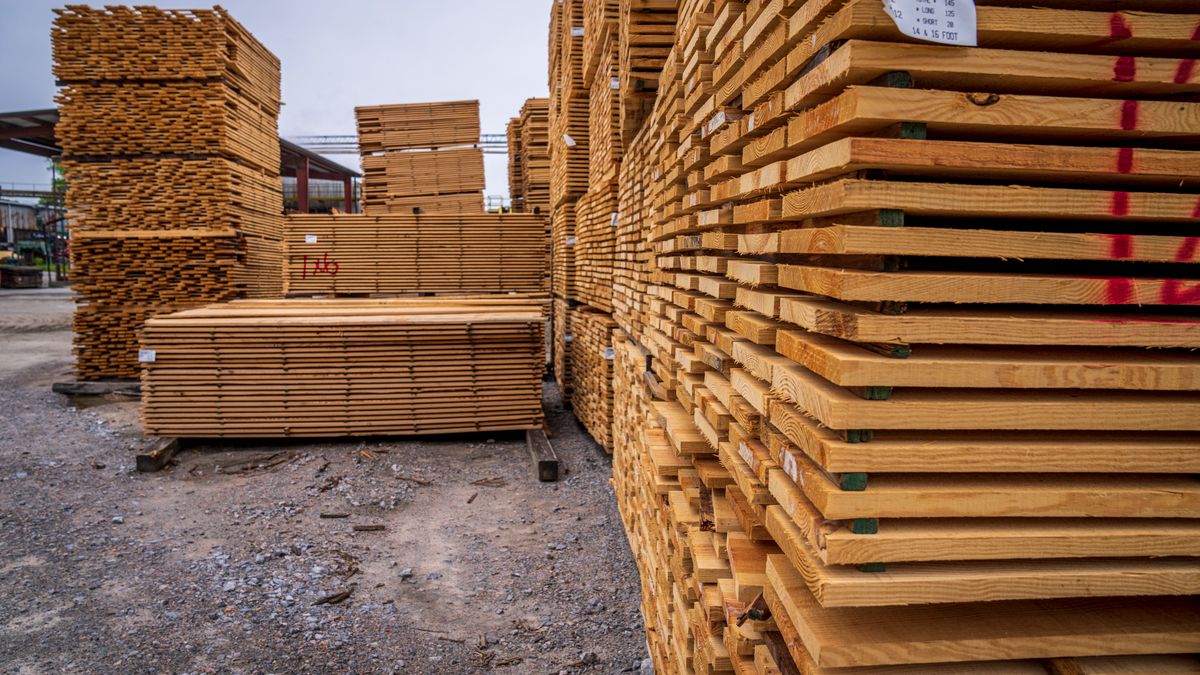
Board foot price calculator
Yards quote the same wood three different ways — per board foot, per linear foot and per piece — which makes comparing them harder than it should be. Pick the unit your quote uses and the calculator converts it to the other two, plus the total for your order.
A worked example: 12 pieces of 8/4 walnut, 7 in wide and 8 ft long, is 2 × 7 × 8 ÷ 12 = 9.33 board feet each, 112 board feet total. At $11.50 per board foot that's $1,288 — or $107.33 per piece, $13.42 per linear foot. If another seller quotes $14 per linear foot for the same board, the first one is cheaper.
Our advice for hardwood: ask whether the price is for rough or surfaced lumber, and whether it's priced on the rough thickness. Surfacing a rough 4/4 board leaves about 13/16 in, and you still pay for 4/4.
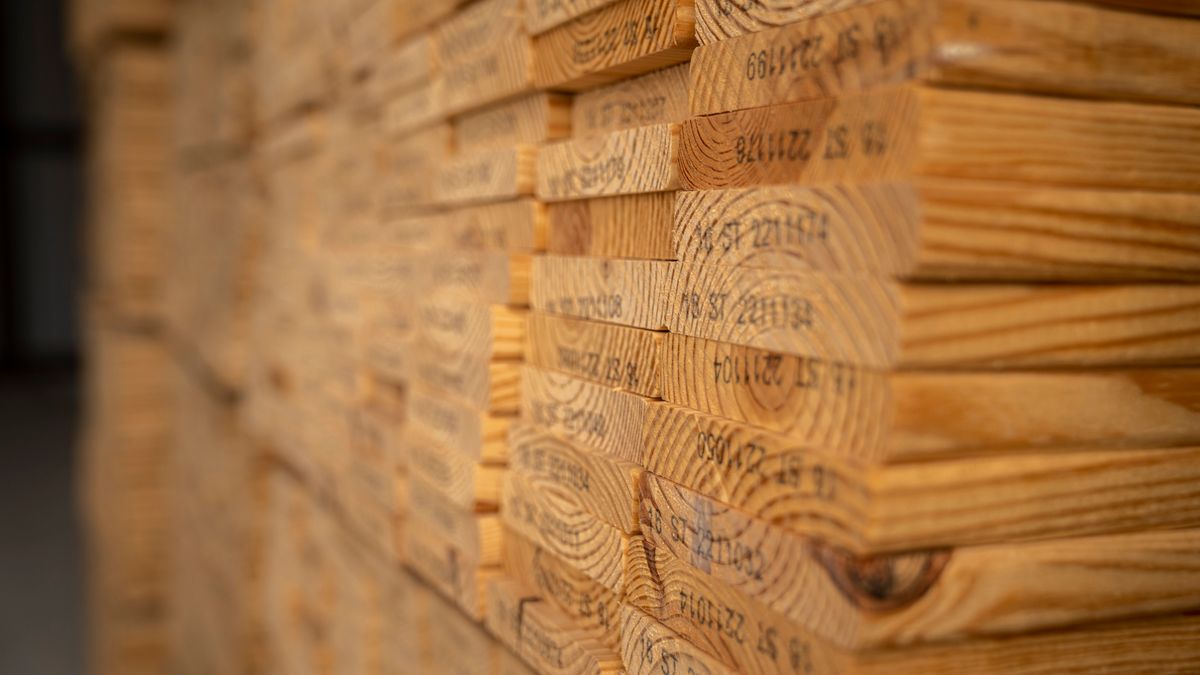
Board feet in a log: Doyle vs International
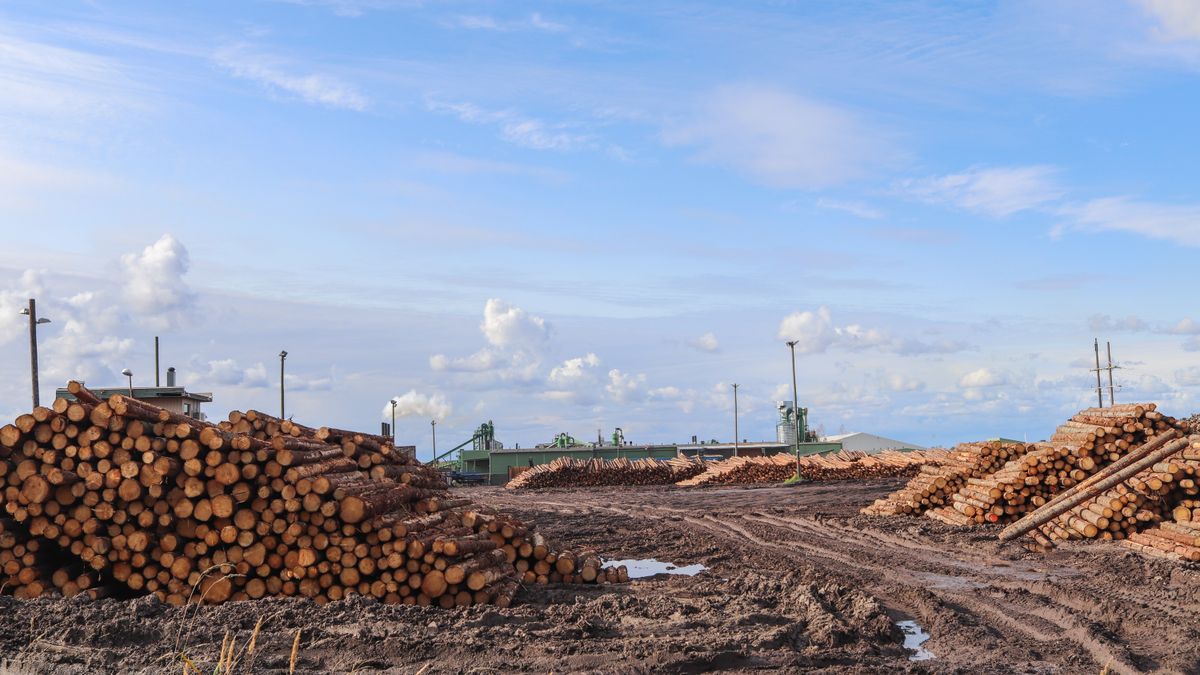
Switch Measure to Logs to estimate how much lumber a log should yield. Measure the small end inside the bark and the length in feet.
| Small-end diameter (16 ft log) | Doyle | International ¼-inch |
|---|---|---|
| 12 in | 64 bd ft | 97 bd ft |
| 16 in | 144 bd ft | 181 bd ft |
| 20 in | 256 bd ft | 290 bd ft |
| 24 in | 400 bd ft | 424 bd ft |
| 30 in | 676 bd ft | 674 bd ft |
Doyle is still the most common rule for buying hardwood logs in much of the South and Midwest, and it heavily underestimates small logs — a 12 in log scales a third less by Doyle than by the International rule. If you're selling timber, know which rule the buyer is using before you compare offers.
Building rather than buying by the foot? The stud calculator counts framing lumber by the piece, and the deck calculator turns a deck size into boards, joists and screws.